


Science & Society News
Learn what is happening inside the Duke Initiative for Science & Society. Stay up-to-date on our research, events, and student activities.
Wed, Jan 07
Op-Ed: DNA, Not AI, Gives Life to Our Songs, by Tift Merritt
AI music. Trained on me. And all your favorite real musicians. Profits going to Big Tech, promising society’s transformation for social good. What’s getting lost in this transaction isn’t just about people who create. It’s missing the very human, “why.”
Tue, Dec 16
Climate Profile: David Hoffman
For David Hoffman, Duke’s Climate Commitment is not just about emissions or energy but about values. “The word commitment really means something,” he says. “It’s an expression of institutional values. Our job is to interrogate those values and then connect them to action so that the benefits extend beyond ourselves, to society at large.”
Sat, Nov 22
LISTEN: Yes, the Data Center Next Door Can Be a Good Neighbor – Sanford Policy360 Podcast
A new report says data centers run by huge companies like Google called hyperscalers could actually be good for the environment in a key way – they could become mobilizers of clean energy and updated grids.
Wed, Nov 12
To Name a Rare Disease, by Misha Angrist
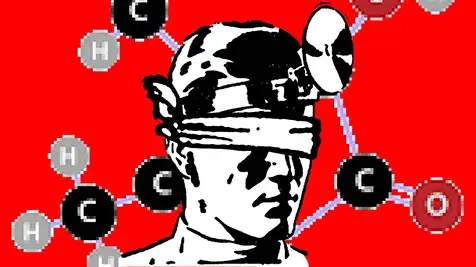 In 2022, a baby formula plant in Sturgis, Michigan, owned by Abbott Laboratories, was closed down after the FDA cited it for unsanitary practices. In addition to halting the supply chain of standard baby formula, the plant’s closure interrupted deliveries of medical foods, including products that people with rare metabolic diseases need in order to survive.
Karen Dolins, a registered dietician and nutritionist who teaches at Columbia, has an adult daughter who has one of these conditions—the one known as maple syrup urine disease. Patients with this genetic disorder are unable to break down protein. While fielding media queries about the acute shortage, Dolins tried to explain that what was happening at Abbott was a grave threat to vulnerable adult patients with diseases like MSUD.
“One journalist actually said to me, ‘Maple syrup urine disease? Well, that doesn’t sound too serious,’” she told me. “And I thought, ‘Oh my God, we really need a name change.’”

This article was originally published on Flaming Hydra. It has been republished here with their permission. If you enjoy this content, please consider supporting their contributors by subscribing!
For the last several years I have been working on a book about maple syrup urine disease, which was first described in 1954 by pediatrician John Menkes. While interning at Boston Children’s Hospital, he’d seen a sick infant whose parents had had three prior babies die in infancy. The mother had noticed an unusual odor in those babies, but not in their lone healthy sibling. By day three Menkes’s patient developed the same sweet smell in his urine, sweat, and earwax. Baby “James J. H.” would die at two weeks of age.
In the early 1960s doctors at Bellevue Hospital proved that babies with MSUD could survive on a diet of specialized formula. We already knew by then that for people with another congenital metabolic disorder, phenylketonuria (PKU), a diet free from the amino acid phenylalanine would keep affected kids fairly healthy. For MSUD patients, the offenders are the three so-called branched-chain amino acids: leucine, valine, and isoleucine.
MSUD is caused by a broken gene that prevents patients from metabolizing these protein building blocks; the maple syrup smell derives from a compound called sotolone, a metabolite of isoleucine that is indeed present in maple syrup. High quantities of leucine and its derivatives are particularly toxic to the brains of these patients. If babies with classic MSUD consume protein (e.g., human breast milk, any kind of meat), their brains swell, and they experience seizures; left untreated, they will die within a few weeks or months.
In the 1990s it was discovered that a liver transplant could alleviate the need for a special diet in MSUD patients. Many families have since chosen this course of treatment for their MSUD kids. For these patients, a new liver without an MSUD-causing mutation is able to supply them with about 12 percent of the normal levels of the necessary enzyme—enough to allow recipients to eat whatever they want without negative consequences. Pediatric transplant surgeons at the University of Pittsburgh and elsewhere have now performed well over 200 of these operations and the transplant patients I’ve spoken to have no regrets.
But liver transplant is not for everyone. In Old Order Mennonites—who are descended from Radical Reformationists fleeing religious persecution in Europe beginning in the 16th century, at least two of whom carried MSUD mutations —the frequency of MSUD is on the order of one in 400, versus one in 180,000 in most other populations. The prospect of an expensive transplant is particularly challenging for this group, since most observant Anabaptists shun private insurance for religious reasons. Securing a transplant for their baby might require Mennonite parents to raise $150,000 or more from their church. Moreover, liver transplant is a major operation and comes with the risk of organ rejection and other complications. And not least, transplant patients must take immunosuppressive drugs for the rest of their lives. Going through with the operation exchanges a neurological and metabolic burden for an immunological one.
All of which means that a few thousand patients choose to soldier on with their original livers, and must continue to rely on formula and low-protein diets. Too much protein will land them in the hospital. When they go to restaurants they have to vet the menu. They must study labels assiduously at the grocery store. They are often asked to explain why exactly they can’t have a burger or edamame or yogurt. And this means answering The Name Question.
“I just tell them it’s a metabolic disorder, it’s similar to PKU,” said David Fischler, who was born in 1988 and diagnosed at a relatively late 18 days of age. Today he works as an analytical chemist in Research Triangle Park and serves on the scientific advisory board of the MSUD Family Support Group. “I might tell them I have MSUD [without spelling it out], and if they want to go Google it and figure out what it is, that’s fine.”
To go through life with a disease that features “urine” in its name elicits a reflexive association with—and aversion to—the scatological. One parent recalled a gathering of MSUD families gathered around a hotel pool, discussing the disease. When other families heard “the U word” they fled the pool en masse. And when Joyce and Wayne Brubacher, MSUD parents who founded the Family Support Group in the 1980s, wanted to establish an online presence, their Mennonite church’s filtering software rejected the use of the word “urine.” In the end, Wayne told me, “Common sense prevailed.”
The thing is, even without the unintended consequences (families deserting swimming pools, reporters’ dismissals), there’s an argument to be made that the name is simply inapt.
“The name is bringing attention to what’s really a very minor symptom of the disease,” Dolins said, “but that has nothing to do with the disease itself.” Moreover, reference to “maple syrup” has the potential to distract and mislead. “It makes it sound like diabetes,” she noted. “But the problem in MSUD is protein, not sugar.”
Finally, there is the matter of context. Pediatrician Holmes Morton has been treating MSUD patients since the 1980s; he and his wife Caroline founded the Clinic for Special Children specifically to treat genetic diseases in Amish and Mennonites. He noted that while the scent is easily detectable in classic cases of MSUD, the evocative power of the term “maple syrup” is hardly universal. “There are many places in the world that don’t have maple trees,” he said.
So if not MSUD, then what should it be called? Morton himself never had a strong opinion about eliding the U-word and calling it “maple syrup disease,” but Joyce Brubacher did. “It was a thorn in my flesh,” she said. “[MSUD] was the medical name in all of the literature. I refused to use [“maple syrup disease”] in the MSUD Newsletter or any other writings.” Both Morton and Brubacher agree that it never really caught on.
Another approach might be to call it “Menkes’ disease.” But while naming diseases after men (and yeah, they’re pretty much all men) might honor the discoverers, such names do nothing to convey the causes or the effects of the conditions they describe.
Inertia is a powerful force, and changing the name of a disease isn’t easy. But it’s not impossible, either. Down syndrome is no longer “mongolism.” In the medical literature, if not in the New Testament, leprosy is now Hansen’s disease. And before Holmes Morton and his colleagues showed up, glutaric aciduria type 1 was referred to as “Amish cerebral palsy.” In the latter case, Morton said, the misnomer had consequences.
“Everybody thought they knew what [cerebral palsy] meant, which was an hypoxic ischemic injury during birth. If a physician didn’t know why a child was disabled, they would say, ‘Oh, that’s cerebral palsy,’ implicitly blaming the midwives and the obstetricians.” But GA1 is not caused by a lack of oxygen; like MSUD, it is a rare inherited metabolic disease that, left untreated, causes brain damage and severe cognitive disability.
The top option in my own utterly unscientific canvass of a handful of patients and providers was “branched chain ketoaciduria.” It offers an explicit nod to the biochemistry, is a fair bit less unwieldy than “branched-chain α-ketoacid dehydrogenase deficiency,” avoids the U-word, and can be easily abbreviated BCK or BCKA, à la PKU. Moreover, it has precedent. Bellevue pediatrician Joe Dancis, who was instrumental in making the first specialized formula, used this name in a case report from 1960.
The patients I spoke to are fine with it. Morton is fine with it as well—ever the exacting clinical biochemist, though, he couldn’t help but note a technical inaccuracy. “The alpha-keto acid of valine is never there [in MSUD patients],” he says. “It’s always hydroxy.” I could hear his Cheshire grin over the phone.
One night last summer, MSUD patient David Fischler took ill. “I felt like shit for a night,” he said. A cold, perhaps, or at worst, the flu. He rebounded quickly. “Much better the next day, then great the third day.” So great that he refereed a rec soccer game for several hours that third night. Then he woke up at 2 a.m. with a familiar, unsettling feeling.
“Mentally I knew I wasn’t right.” (In his worst metabolic crises, he will hallucinate.) He went downstairs, shaky, and yelled up to his wife that they had to go to the hospital right away. He grabbed the letter off the fridge that describes MSUD and everything that needed to happen—calling his clinician, giving him meds and lots of carbs, stat.
At the hospital he took a Covid test and it came back positive. While his Covid symptoms had abated, his body was struggling to keep the infection at bay while also trying to negotiate his fraught metabolism. “I was going into a catabolic state because I just didn’t have the extra calories I needed.”
The name of his condition, he told me, is stigmatizing and inadequate, but it really isn’t relevant in his most tenuous moments; for “civilians,” it’s enough to know that he can’t eat protein, and to help him if he asks. For ER doctors, when he needs them, the letter on the fridge will tell them everything they need to know about how to deal with acute MSUD.
Joyce Brubacher thinks that while “branched-chain ketoaciduria” would be a more descriptive name, there is still value in prompting a naïve parent—or perhaps even a naïve clinician—to notice a pungent, sweet smell in a newborn.
And anyway, it’s too late, she said. “It would only cause confusion.”
***
Editors’ note: A previous version of this story described the Brubachers’ Mennonite church as wary of them using the word “urine” on the MSUD support group website in the 1990s. It was not their church per se, but rather the internet filtering software that the church used at the time that rejected the use of the word. Flaming Hydra regrets the error.
A contribution by Misha Angrist
Wed, Nov 05
Toward Global Reproductive Justice: A Universal Framework for Evaluating Equity and Autonomy in In-Vitro Fertilization Policies
Ruoran Murphy Qiu and Renee Muthakana, graduate students at Duke University, co-authored a new study with Dr. Wenhui Mao of the Duke Global Health Institute that examines global gaps in fertility care. Originally developed as a white paper for Dr. Robyn Caplan’s Communicating Science Policy course, the project evolved into a full research study titled “Toward Global Reproductive Justice: A Universal Framework for Evaluating Equity and Autonomy in In-Vitro Fertilization Policies,” published October 31, 2025, in BMC Reproductive Health.
By analyzing IVF policies from 24 countries, the team developed the Universal IVF Justice Framework to assess how national policies promote, or restrict, equity and reproductive autonomy. The study found that access to IVF is heavily shaped by economic conditions, geography, and social norms, with significant disparities between high-income and lower-resource settings. The framework provides policymakers and researchers with a practical tool to identify and address these global inequities in fertility care.